Wayne Hanson: A Journey of Resilience and Hope

Social Issues Dec 08, 2024 Wayne Hanson

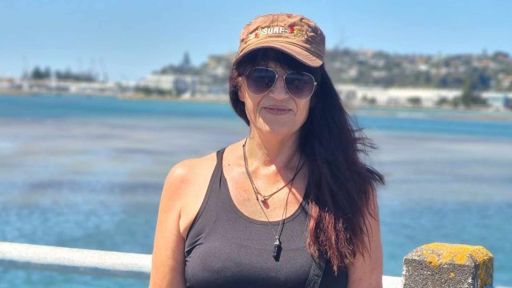
I was born on 23 October 1971 in Bury St Edmunds, Suffolk, England, to my parents, Eric and Ann Hanson. My childhood was filled with adventure and mischief, and as the eldest of three children, I naturally took on the role of protector and guide to my younger brother and sister.

My parents gave me a wonderful upbringing, full of love and stories of their extraordinary lives. My father, Eric, grew up in Dover, Kent, and joined the army at the age of 14. He served as a physical training instructor, preparing soldiers for the challenges of military life, including elite units like the SAS and SBS. After leaving the army, he joined the Merchant Navy as a petty officer and chef, travelling the world and meeting my mother, Ann, along the way.

In the early 1970s, my father retired from military life, and we moved to Lowestoft, a coastal town in Suffolk. He worked on oil rigs, often spending weeks away from home. During those times, I tried to step up and help my family as best as I could.

In 1979, my father made the life-changing decision to move us to New Zealand. We settled in Palmerston North, where I attended Awapuni Primary School, then Monrad Intermediate, and eventually Awatapu College, where I completed my schooling in 1988.

After leaving school, I took on various jobs, from construction work to forestry. I also participated in the Limited Service Volunteers course at Linton Army Camp, which taught me discipline and resilience.

In 1992, I decided to explore the world and returned to the UK, where I joined the army, inspired by my father’s service. After training at Pirbright Army Camp, I became a rifleman and later a marksman (sniper). Over the next eight and a half years, I served in Northern Ireland, Cyprus, and other locations.

My military career came to an unexpected end after a training accident, where I fell 40 feet during a night exercise. The fall left me with severe injuries, including damage to my right leg that required multiple surgeries. Over the years, I underwent 19 operations, including a final reconstruction using Kevlar in 2014.

Despite the challenges, I tried to focus on recovery and building a new life. In 2015, I returned to New Zealand, enrolled in a mental health and wellbeing course at Whanganui UCOL, and began working in the field. Helping others gave me a sense of purpose, but over time, I struggled with burnout, depression, and PTSD.

Losing my father in 2020 was another difficult moment that brought my PTSD back to the forefront. However, it also deepened my understanding of the importance of support and connection.

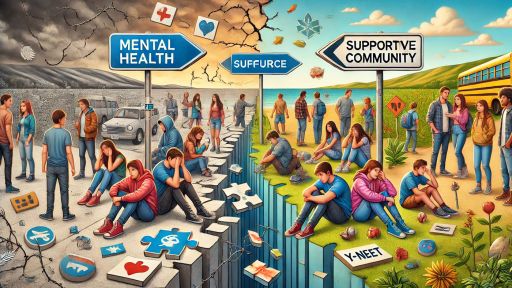
I share my story not because it’s extraordinary, but because it’s real. Mental health challenges affect people from all walks of life, and it’s so important that we create spaces where people feel safe to talk and seek help. Whether it’s a conversation over coffee, a phone call, or reaching out to an organisation, there is always someone who cares and is willing to help.

Mental health isn’t just a challenge for soldiers—it’s a challenge for all of us. By supporting one another, we can build stronger, more compassionate communities where no one feels alone.

This is my story—a reflection of resilience, hope, and the belief that brighter days are always within reach.

Welcoming Dr Robin Youngson: A Groundbreaking Trauma Specialist and Trustee of Kiwis For Good Social Issues Welcoming Dr Robin Youngson: A Groundbreaking Trauma Specialist and Trustee of Kiwis For Good Kiwis For Good is proud to announce the appointment of Dr Robin Youngson as a Trustee of our organisation. Dr Youngson is a leading trauma specialist and the founder of a pioneering therapeutic practice known as Somatic Compassion – a powerful integration of neuroscience, affective touch, and compassionate presence that has transformative effects on trauma healing. Read The Micronutrient Revolution: How Professor Julia Rucklidge is Changing Mental Health Treatment Social Issues The Micronutrient Revolution: How Professor Julia Rucklidge is Changing Mental Health Treatment Professor Julia Rucklidge at the University of Canterbury in New Zealand is no ordinary clinical psychologist. For over a decade, her research into the effects of micronutrients on mental health has challenged mainstream approaches, which often prioritise pharmaceutical treatments over nutritional interventions. Her work has not only caught the attention of her peers but has also fuelled a worldwide debate about how we understand, treat, and prevent mental health disorders. Read I was born in Christchurch New Zealand, into an upper class family Social Issues I was born in Christchurch New Zealand, into an upper class family I was born in Christchurch New Zealand, into an upper class family. I don't like spreading the family name around. So I'll just go by my alias, Andy. Read 'Running on Empty: Antidepressants and Youth Suicide' by Richard Vernall Social Issues 'Running on Empty: Antidepressants and Youth Suicide' by Richard Vernall "Running on Empty" by Richard Vernall is a crucial and deeply insightful exploration into one of the most pressing issues facing New Zealand today: youth suicide and the use of antidepressants. This meticulously researched book delves into the disturbing statistics of youth suicide rates in New Zealand, providing a historical overview from the 1980s to the present day. Vernall presents a compelling argument that, despite the widespread prescription of antidepressants, there has been negligible progress in reducing these tragic deaths. Read The day that changed my life, and how it could help you PoliticsEnvironmentSocial IssuesCulture The day that changed my life, and how it could help you January 31st, 2007, 8:30 am. Oxford North Canterbury. I was working as a rural fencer and that day I was putting in a stay post on an already existing deer fence at the compound where I worked. Read New Zealand’s Drinking Culture and the Shadow It Casts on Mental Health Social Issues New Zealand’s Drinking Culture and the Shadow It Casts on Mental Health Alcohol, long considered a social cornerstone in New Zealand, has once again come under scrutiny, this time sparked by comments from mental health advocate Mike King. King suggested that, in some cases, alcohol may have prevented individuals from taking their own lives by numbing overwhelming distress. Read
Help Us Help Others!

Your donations are incredibly important for us, and enable us to use our initiatives to help our fellow Kiwis.

Donate today
Join Our Newsletter

For the latest news and projects, keep up-to-date with our newsletter. We promise not to spam you; we get enough of that ourselves!