
An ex soldiers battle after leaving the army
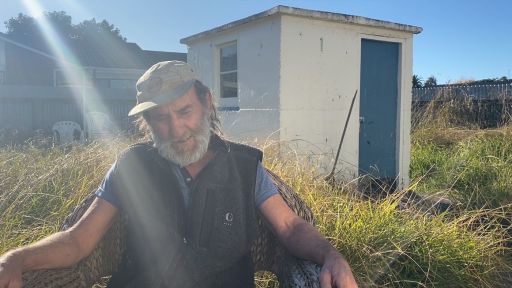
Karl had dreamed of joining the military since he was a little kid. He thrived on pressure and enjoyed pushing himself, so was thrilled when his dream came true. Unfortunately for Karl, the idea of being in the military was better than the reality of it.
He joined when he was older and due to that he felt he was targeted by a number of people “in my own ranks but primarily those in the senior ranks.” After much contemplation Karl decided to resign. “My dream job was now over. So what do I do now?”. Two days after leaving his job, Karl’s granddaughter was born and within 24 hours it was discovered that there was something wrong with her and that she only had a 30% chance of survival. She had to be airlifted to neo-natal intensive care in Wellington. Karl flew to Wellington to support his daughter. “I put on a brave face to protect my daughter". After three stressful weeks Karl left his daughter’s side to return to Christchurch unsure whether his granddaughter would pull through. Thankfully she did.

Over the next wee while his life continued to spiral downhill. Karl’s living situation crumbled, his relationship ended and he struggled to find a job. Three weeks into his new work placement he came across messages of condolences on an army mate’s Facebook page. “Concerned, I rang some mates who confirmed that he had killed himself. This was someone I had done my basic training with. You become very close to people when you go through 16 weeks of hell and we had been posted together afterwards too”.
To this day Karl can still remember the feeling of hearing the news that his friend had passed away. “It was like I had been emptied out. I went back to my house and drank myself into a stupor. I was numb, wondering what I’d do, angry, hurt, struggling and with no sense of direction. I sat and moped while a thousand thoughts ran through my head”. Karl acknowledged that he was not ok and ended up taking himself to his GP. He explained that he was having thoughts of suicide and that he really needed some help. Due to past experience Karl wanted to avoid the medication route and was told that someone would be in touch shortly. Unfortunately, Karl’s case was overlooked and no-one got in touch. He continued to fight alone and each day his thoughts of suicide became stronger.
Karl describes the moment that his life was saved. “I was packed, ready to leave, with a plan to end my life, when one of my best friends, Bernie turned up at my house. He told me that he felt he had needed to see me. He saved me, I have no doubt about that. We went out into the bush and talked, wandered and talked some more. Without Bernie I wouldn’t have seen any light or hope. I would have just been another statistic”. Karl strongly believes that having people around you and sharing how you are feeling is “100% vital”. “Make sure your friends know you are there for them, pop in and see them randomly, offer to cook them a meal, do their lawns. That kind of stuff helps people more than we know. Showing that you care and are available to chat might make that first step of opening up easier”.

As of today, Karl is in a great place and feels lucky to be alive and to be able to use his story to help those who are in a similar place to where he once was. “Conversations I have had since have led me to understand that I had ‘situational depression’. The combined stresses happening in such a short time-frame meant my mental state didn’t have time to process each one before the next one was dumped on me to deal with. I value the experience in a lot of ways as it has taught me a LOT about my stress levels and when I need to step back and ask for help”.
What worked for Karl throughout this time was finding what calmed him. For Karl it was about being out in the bush as well as going to the gym. He lived by “turning negatives into positives” so when he worked out at the gym he saw it as turning negative energy into positive energy. Working out made Karl feel stronger not only physically but mentally too.

When we asked Karl why he thought the men’s suicide rate is so high in New Zealand he said, “It’s the whole ‘harden up, you’re a man!’ standpoint.” Men are generally by nature brought up to be strong, and not to cry, and told that only women share their feelings. It’s made out to be a bad thing, that sharing your feelings equals weakness. We are often made to feel inferior when we share our feelings but also when we don’t. Growing up there are a lot of mixed messages.”.
“Find that one thing that you can sink your teeth into and don’t let it go, no matter what!".